- Get link
- X
- Other Apps
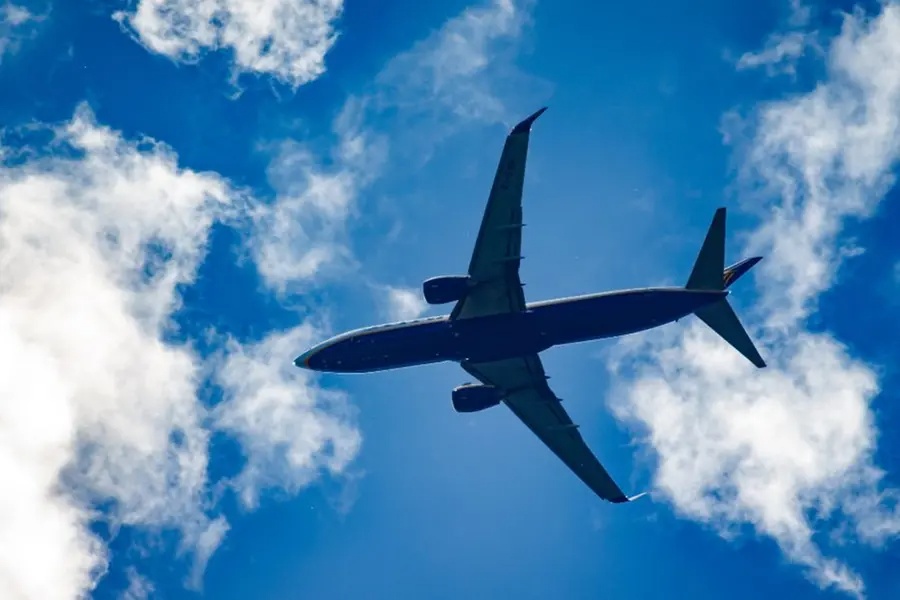
Malaysia Airlines Flight MH370 vanished into thin air on March 8, 2014, with 239 people on board. It remains the biggest mystery in the history of aviation because the world still does not have the main wreckage or the flight recorders. Radars lost the plane over the South China Sea, but it kept flying for seven more hours into the dark Indian Ocean.
The short answer is that the plane likely ran out of fuel and crashed into a remote part of the sea. Satellite data shows it turned away from its path to Beijing and flew south until it could go no further. While pieces of debris have washed up on beaches, the main body of the plane and the "black boxes" are still missing deep underwater.
What happened the night the plane disappeared?
The flight started as a normal trip from Kuala Lumpur to Beijing. It was a calm night with clear skies. At 1:19 AM, the pilot said, "Good night Malaysian three seven zero." That was the last time anyone heard a human voice from the cockpit. Seconds later, the plane's transponder was turned off manually.
A transponder is a small tool that tells air traffic control where a plane is. When it went dark, the plane became a ghost on the screens. It did not just disappear, though. Military radar tracked it making a sharp left turn. It flew back across Malaysia and then headed toward the Andaman Sea. This was not a mistake by a computer. Someone was steering the plane.
Think about the skill it takes to fly a Boeing 777. You cannot just push a random button and hide from the world. This person knew exactly where the radar gaps were. They flew along the border of two countries so neither side would think it was their problem. It was a clever and scary move that left experts baffled for years.

The secret pings that tracked a ghost flight
For days, the world looked in the wrong place. Ships searched the South China Sea because that is where the signal stopped. Then, a British company called Inmarsat found something incredible. Even though the radio was off, a satellite was still "talking" to the plane's data link once an hour. These are called handshakes or pings.
These pings did not give a GPS location, but they showed the distance between the satellite and the plane. By measuring these circles, scientists found two paths the plane could have taken. One went north toward Central Asia. The other went south toward the Antarctic. Because no country saw a giant plane in their north airspace, the southern path became the focus.
The plane flew for hours in total silence. No one used a cell phone. No emergency signals were sent. It was just a lonely flight over the deep, cold water. If you want to read about other mysteries involving things left behind, you might enjoy The Message in a Bottle That Solved a 100 Year Old Mystery which shows how even small clues can tell a story.
Where is the wreckage of MH370?
The search for the plane was the most expensive search ever. Ships used sonar to look at the sea floor, which is four miles deep in some spots. They found old shipwrecks and underwater volcanoes, but they did not find the Boeing 777. The area is huge, and the ocean floor is as rough as the Rocky Mountains.
Even though the main body is missing, we have physical proof the plane crashed. In 2015, a piece of a wing called a flaperon washed up on Reunion Island. This island is thousands of miles away from where the plane was last seen. Since then, over 30 pieces of debris have been found on the coasts of Africa and Madagascar. These pieces prove the plane ended up in the Indian Ocean.
One piece found by a beachcomber had burn marks on it. Another piece was part of a TV screen from the back of a seat. These tiny bits of plastic and metal are all the families have left. It is hard to imagine how a plane so big can leave so little behind. If you are interested in more strange events, check out this anchor text about the topic of missing things.
The most popular theories about the disappearance
When there are no hard facts, people come up with many ideas. Some say it was a sudden fire that knocked out the crew. This theory suggests the pilots tried to turn back but were overcome by smoke. The plane then flew on autopilot until the fuel was gone. It is a simple idea, but it doesn't explain why the communication gear was turned off one by one.
Another theory is much darker. Many experts believe the captain, Zaharie Ahmad Shah, took the plane on a final journey. Investigators found a flight simulator in his home. On that simulator, someone had practiced a path into the southern Indian Ocean. This path was very close to the one the real plane took. This suggests the act was planned well in advance.
There are also wilder ideas. Some people think the plane was hijacked by a stowaway or even taken by a foreign government. However, there is zero evidence for these claims. We have to stick to what the radar and satellites tell us. You can see how experts deal with these types of difficult puzzles on this page about Lists of problems in the world.
Why can't we find the black boxes?
Every big plane has two orange boxes that record voices and flight data. They have batteries that send out a "ping" for about 30 days. Because it took so long to find the right search area, those batteries died before anyone got close. Once the boxes stop pinging, they are just small metal cubes in a giant, dark ocean.
The pressure at the bottom of the Indian Ocean is enough to crush a person in a second. To find the boxes now, we need robots that can handle that pressure and cameras that can see through the silt. The sea floor is covered in "marine snow," which is a layer of dead sea life. This layer can bury small objects very quickly, making them invisible to cameras.
Some companies still want to search. They use new technology like "ocean infinity" drones that can sweep the floor faster than before. They believe the plane is just outside the area we already looked. It is a race against time and the elements. Every year that passes makes the metal rust and the clues fade away.
The human side of the mystery
We often talk about the plane as a machine, but it was full of people. There were 227 passengers from 14 different countries. There were couples on their honeymoon, students going home, and engineers going to work. For their families, the mystery is a wound that never heals. They cannot have a funeral because there is no body to bury.
Every year on the anniversary, the families meet in Kuala Lumpur. They push the government to keep looking. They deserve to know what happened in those final hours. Was it a fast crash or a slow descent? Did the passengers know what was happening? Without the flight recorders, we may never know the truth of the final minutes.
I think the most likely answer is the saddest one. A person in the cockpit likely made a choice to take the plane. It is hard to accept because we want to believe in safety and logic. But the radar turns and the silent hours point to a human hand at the controls. It was a planned exit from the world.
What happens next in the search?
New technology might be the key to solving this. Scientists are looking at how barnacles grow on the debris found in Africa. By looking at the shells, they can tell the temperature of the water the debris moved through. This helps them map the path of the trash back to the crash site. It is like a biological GPS.
There is also a new method using radio waves from amateur radio operators. These waves are affected when a plane flies through them. By looking at old data from that night, some researchers think they have found a new "final point" for the flight. If they are right, the plane is sitting in a spot that was never searched before.
Will we ever find Flight MH370? The ocean is very good at hiding secrets. But we found the Titanic, and we found the wreckage of Air France 447 after two years. As long as people are curious, the search will continue. One day, a robot camera might turn a corner in the deep and see the red and blue logo of a lost plane.
The mystery of the plane that disappeared reminds us how big the world really is. Even with all our satellites and phones, a giant machine can still get lost. It makes you look up at the sky differently when you see a plane fly over. Do you think we will find the main wreckage in the next ten years, or is it gone forever?
Comments
Post a Comment